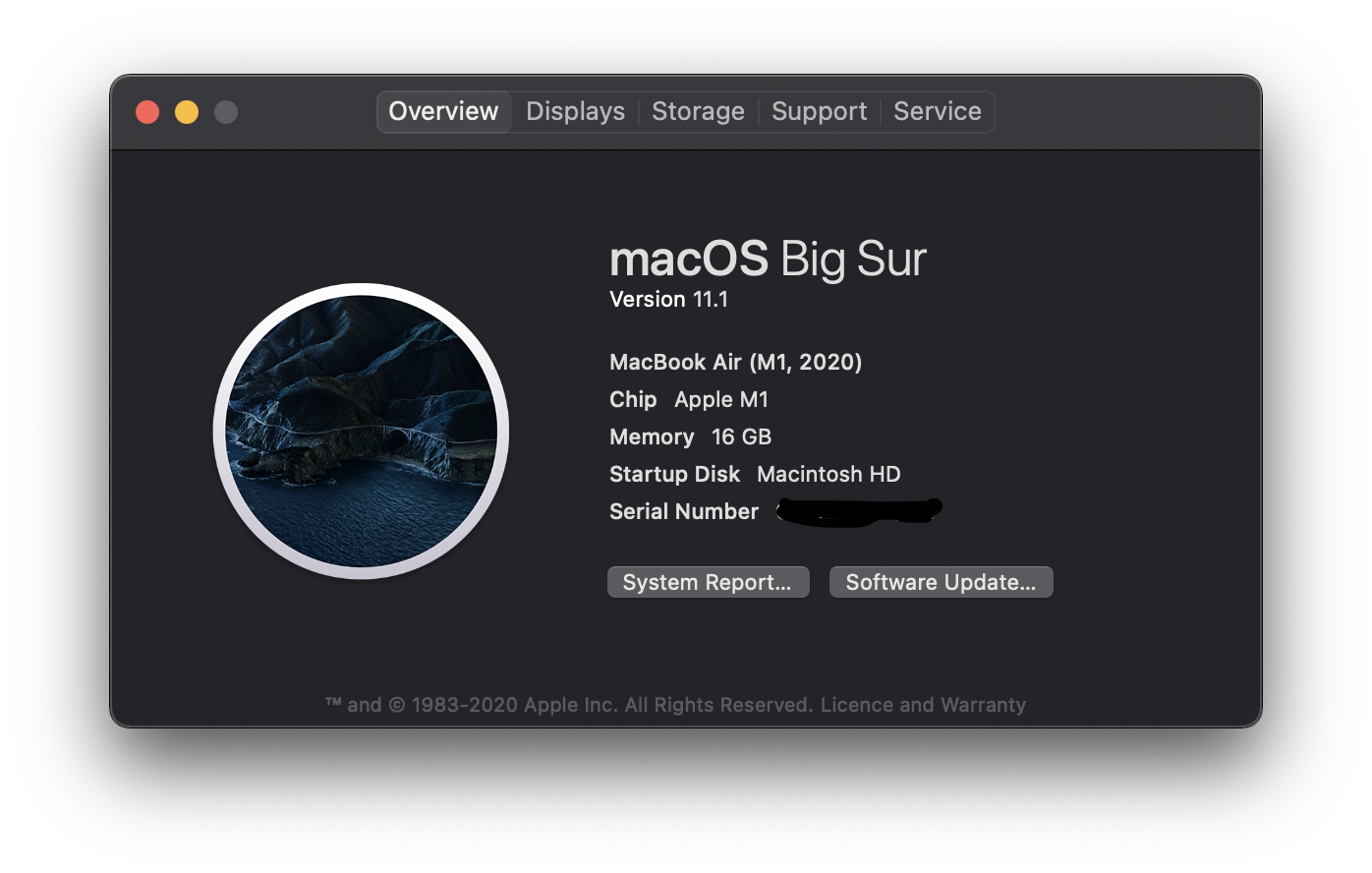
My first impressions and setup notes after switching to the Apple Silicon M1 MacBook Air.
First Impressions
- No heating issues at all
- Noticeably long battery life
- Good speaker quality
Setting Up a Node.js Development Environment
Apple Silicon uses ARM architecture, so some tools need special handling. Here’s what I ran into and how I fixed it.
Issue 1: nvm and Node.js won’t install natively
As of early 2021, nvm couldn’t install Node.js natively on M1. The fix is to run Terminal in Rosetta (x86_64 emulation mode).
Step 1: Open Terminal in Rosetta
- Find Terminal (or iTerm) in Finder
- Right-click → Get Info
- Check Open using Rosetta
- Restart Terminal
Now install nvm and Node.js normally — they’ll run under x86_64.
References: Node.js on Apple Silicon
Issue 2: “bad CPU type in executable” errors
Install Rosetta via the command line:
1 | softwareupdate --install-rosetta |
Reference: zsh bad CPU type fix
Issue 3: Check and switch architecture
To check which architecture your shell is running under:
1 | node -p process.arch |
To switch to x86_64:
1 | arch -x86_64 $SHELL |
Step 2: Install common dev tools via Homebrew
Once Rosetta is set up, install everything you need:
1 | brew install iterm2 alfred licecap sublime-text visual-studio-code karabiner-elements sourcetree araxis-merge itsycal the-unarchiver easyfind omnidisksweeper |
Miscellaneous: “You don’t have permission to open the application”
If an app is blocked from opening:
Step 1: Open Terminal
Step 2: Run:
1 | sudo chmod -R 755 /path/to/app |
Step 3: Enter your password when prompted
Step 4: Try opening the app again — it should work now.
Initial system stats (without any apps installed):